
The Key to Making Sustainable Change
Thinking about and implementing changes in our habits can feel deeply daunting, it's nearly impossible to get started through thought alone. Let's revisit the Change Model and review some foundational concepts.
First and foremost, remember that nobody truly changes unless they've made a conscious decision to do so. That decision must come from within, not from outside pressure or a vague sense that you should change. But once that decision is made, something almost predictable happens: all the reasons you haven't been able to make these changes before will come rushing to the surface, threatening to stop you in your tracks almost immediately.
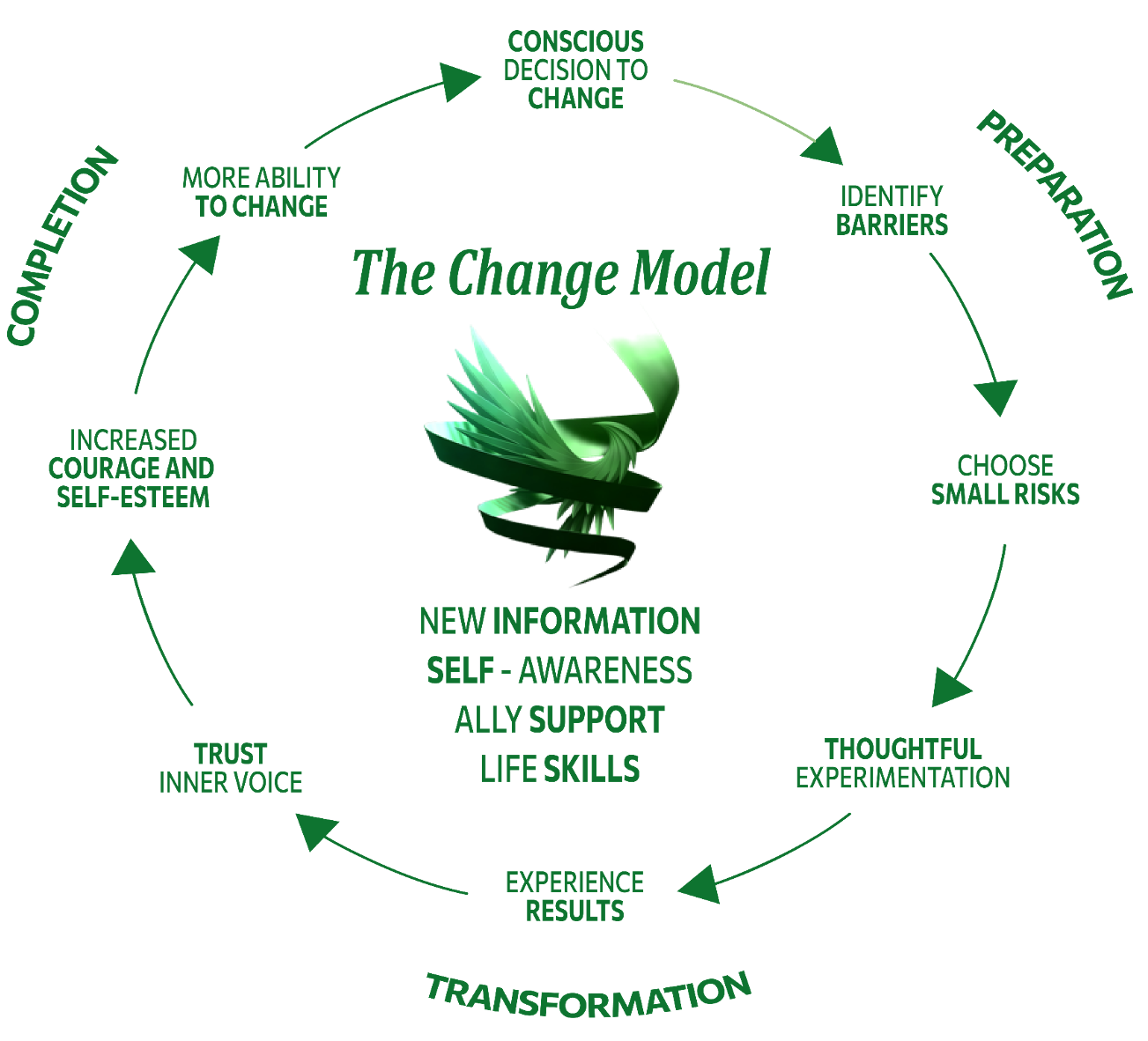
Take a moment to reflect on what your personal barriers and beliefs might be. Here are some common ones to get you thinking:
My habits are hardwired
I am afraid to change (it is well known that people are more likely to stay miserable than risk the unknown of change)
I don't have time to add anything else to my plate
I am in pain
I wouldn't know where to start
I can't afford a gym membership
I feel overwhelmed by all the information out there
These barriers need to be identified and acknowledged before you can actually move forward. In my practice and personal experience, I've seen how much more effectively people identify and work through their barriers when they have the support of the right person, and not just anyone, but an Ally.
As you can see, Ally Support is foundational to the Change Model, and here is why… what truly stands in the way of our ability to change is our personal beliefs about ourselves.
We know that our beliefs about ourselves are initially formed in the presence of others (our parents and the adults around us as we grow up.) It stands to reason, then, that changing those beliefs and then changing our behavior must also happen in the presence of others. And that someone has very specific characteristics. I call these people Allies. Once I actually came to understand this concept, my ability to work effectively with my clients expanded and became more powerful
The process of personal change does not happen in a vacuum. At times, each of us needs the support of others to get started and keep moving forward. The people we turn to for support and guidance, whether family, friends, or healthcare practitioners, should demonstrate certain qualities. I believe these qualities are non-negotiable.
The following is a list of characteristics that true Allies possess:
In their presence, you always feel good about yourself
They work on their own self-awareness
They accept you exactly as you are without conditions
They are never shaming or judgmental
They guide rather than lecture
They model rather than preach
They can listen without rushing to fix
They offer advice only when asked
They are consistent and reliable
Their presence makes you feel safe
They are supportive rather than "should-ing"
They communicate clearly and never push their own agenda
They invite collaborative interaction
They are someone with whom you can set goals and feel okay about yourself if you slip off track
If you are wondering if you're in the presence of an Ally. Listen to your gut (your body's built-in alarm system.) If your gut feels tense or in a knot, you are not with an Ally.
After you have successfully identified one or more of these special individuals in your life and identified your barriers to the changes you desire to make you are ready to move forward. Please note that the next step in the Change Model is to take small risks, tiny baby steps. If you “bite off ore that you can chew” you will find yourself right back at the starting point. Often with more shame to add to your load. And it will be harder to begin again.
When someone in my practice wants to reduce pain and build strength and resilience, I don't begin by handing them a long list of exercises and habit changes to do right away. First, I focus on calming their nervous system so they can access their own inner resources. From there, together we identify one small new habit or exercise to incorporate into their daily routine. This "baby steps" approach builds success, and success builds self-esteem, which in turn creates greater capacity for change.
I've included a link below to my communications style chart as a reference tool, both for practicing being an Ally yourself and for recognizing the Allies in your life. Many people find it helpful to print it out and keep it somewhere they'll see it often so the strategies can be repeated/embedded and they will become more and more regular and natural. And trust me, your life will run more smoothly and with less conflict.
These concepts of The Change Model and Ally Support are integral to my life and to my professional practice. If you or anyone you know is struggling to get out of pain and implement the changes they desire please pass on my contact information. I offer 15 minute complimentary consultations and I see individuals in person and virtually.